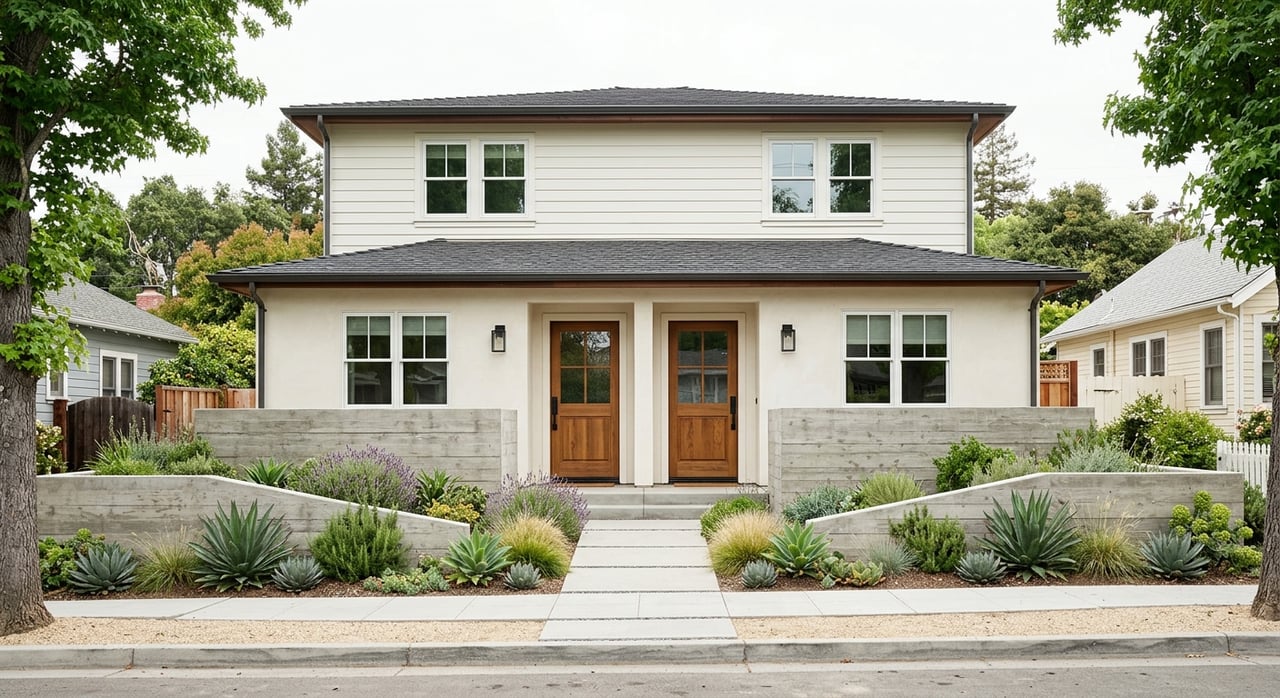
If East Bay home prices have you wondering whether ownership is possible without stretching your budget to the limit, house hacking may be worth a closer look. In NOBE and North Oakland, the idea can be surprisingly practical: live in one part of the property and use rent from the rest to help offset your monthly costs. The key is knowing that this corridor crosses Oakland, Berkeley, and Emeryville, where the rules can change by address. Let’s dive in.
Why house hacking works here
House hacking is often talked about like an investor play, but for many buyers in NOBE and North Oakland, it is really an affordability strategy first. You buy a home you plan to live in, then rent out another unit, an ADU, or even bedrooms, depending on the property and local rules. That can help lower your carrying costs while you build equity in a market where every dollar matters.
This part of the East Bay is especially interesting because one neighborhood search can include homes in three different cities. A property in Oakland may come with a different registration or tenant-protection setup than a similar property in Berkeley or Emeryville. That means the best opportunity is not just about price or layout. It is about whether your plan fits the exact address.
Property types to consider
Small multi-unit homes
For many first-time house hackers, a 2-to-4-unit property is the most obvious setup. You live in one unit and rent the others. In some cases, rental income from the non-owner-occupied units may help with mortgage qualifying if the loan program allows it and the income is properly documented.
That can make a small multi-unit property worth considering if you want a clearer separation between your space and your rental space. It will not be the right fit for everyone, but it can be a smart option if you want income potential built into the property from day one.
Single-family homes with ADU potential
You do not need a duplex to house hack in this area. A single-family home can work if it has space for an accessory dwelling unit, often called an ADU, or a junior accessory dwelling unit, called a JADU. California treats ADUs and JADUs as a statewide housing type, but each city still controls parts of the local approval process.
That matters a lot in NOBE and North Oakland. Oakland allows ADUs on single-family and multi-family properties and offers pre-approved detached ADU plans in studio, one-bedroom, and two-bedroom versions, subject to site compatibility review. Berkeley also allows ADUs on single-family, duplex, and multi-family lots, offers pre-approved designs, and has a pilot amnesty program for certain unpermitted ADU or JADU units built before January 1, 2020. Emeryville has its own ADU application process and lists a current planning fee of $528, while also stating that ADUs are not subject to development impact fees.
A big takeaway here is that house hacking does not have to mean custom construction from scratch. Pre-approved plans can make the process feel more manageable on the right property.
Room rentals and flexible layouts
Some buyers house hack without creating a separate legal unit. They buy a home with a flexible floor plan and rent out one or more bedrooms. In older East Bay housing stock, that might look like a semi-separated wing, a lower level with added privacy, or a layout that gives everyone a little breathing room.
This approach can be more accessible, but it is also where local tenancy rules really matter. Oakland says that if you live in the house as your principal residence and rent out individual bedrooms, each bedroom must be registered as its own covered rental unit. Berkeley notes that some shared-kitchen or shared-bath arrangements are not covered, and Emeryville says owner-occupied units where the owner rents two or fewer bedrooms are exempt from its ordinance.
Why the city line matters
Oakland rules to check
If the property is in Oakland, look closely at rent registration requirements and how your setup is classified. Oakland says units subject to the RAP program fee must be registered, and owner-occupied homes with rented individual bedrooms may require each bedroom to be registered as a covered rental unit. If your plan involves an ADU, Oakland also says ADUs cannot be used for stays shorter than 30 days.
For buyers, the lesson is simple: do not assume a casual bedroom-rental plan is automatically low-friction. In Oakland, your intended use can trigger specific obligations.
Berkeley rules to check
Berkeley has its own system and encourages owners and buyers to use its rent-board lookup tool to see whether a unit is fully covered, partially covered, or not covered. The city’s current ADU and JADU standards took effect on November 9, 2023, and the local details matter when you are evaluating what can be built or rented.
Berkeley also notes that some shared living arrangements are not covered, and it specifically states that tenancies started after November 7, 2018 on properties where one unit is an ADU and either unit is owner-occupied are not covered. That is the kind of highly specific rule that can shape whether a property is a strong fit for your plan.
Emeryville rules to check
Emeryville is smaller, but it has its own separate tenant-protection framework and ADU process. The city says most residential rental units are covered by its ordinance, though some owner-occupied units are exempt. It also publishes its ADU process and fee schedule, which helps buyers evaluate feasibility before they commit.
In practical terms, Emeryville can be appealing if you are considering a compact property with a simple owner-occupied setup. But again, the details matter more than the neighborhood label.
Due diligence before you write an offer
In this corridor, house hacking success starts before the offer, not after closing. You want to confirm whether the property can be legally used the way you intend, whether as a small multi-unit, a room-rental setup, or a future ADU project. A beautiful layout means less if the zoning, permit path, or rental rules do not support your plan.
Start with the exact property and ask targeted questions:
- Is the home in Oakland, Berkeley, or Emeryville?
- Is the current unit configuration legal and documented?
- If there is an existing ADU or conversion, was it permitted?
- If you plan to add an ADU, does the lot and zoning support it?
- Will your intended rental setup trigger rent registration or other local requirements?
- If you are counting on future rent, what documentation would your lender need?
This is also an area where older online advice can get outdated fast. California HCD updated its ADU handbook in March 2026, with an addendum summarizing state-law changes effective January 1, 2026. That is one more reason to verify current rules instead of relying on an old PDF or a generic blog post.
Financing: useful, but not automatic
One of the most common house hacking questions is whether expected rent can help you qualify for the mortgage. Sometimes, yes. Guidance cited in the research report shows that rental income from a 2-to-4-unit primary residence or from an ADU may be considered in some qualifying scenarios if the loan program allows it and the income is properly documented.
That said, projected rent does not replace underwriting. Lenders still have to evaluate your full financial picture, including income, assets, employment, credit history, and monthly obligations. The smart move is to talk with a lender early so you know what counts, what does not, and how different property types may affect your options.
Taxes, records, and your support team
If you rent out part of your home, recordkeeping matters from the start. IRS guidance says most rental income must be reported, many rental expenses may be deductible, and if a home is used for both personal and rental purposes, expenses must be divided between those uses. That makes clean documentation important.
Keep organized records like:
- Leases or written rental agreements
- Rent-registration status, if required
- Receipts for repairs and improvements
- Utility and maintenance records
- Clear notes on which spaces are personal and which are rental use
House hacking also tends to go better when you build the right team early. In most cases, that means a lender to test the numbers, a contractor or ADU designer to test feasibility, a permit planner to check compliance, a landlord-tenant attorney or rent-board specialist to review tenancy rules, a CPA to discuss tax treatment, and an insurance agent to confirm coverage.
A smart way to think about house hacking
The best house-hacking property is not always the one with the highest theoretical rent. It is the one that is financeable, legal, insurable, and manageable for your life. In NOBE and North Oakland, that usually means staying grounded in the basics: exact address, exact unit setup, exact rental plan.
If you approach it that way, house hacking can be a thoughtful path into ownership in the East Bay rather than a risky shortcut. You do not need a perfect deal or a flashy strategy. You need a clear plan, solid due diligence, and a property that supports what you actually want to do.
If you want help evaluating homes for house-hacking potential in Oakland, Berkeley, or Emeryville, Spencer Mills can help you build a practical, local plan for your next move.
FAQs
Can house hacking in NOBE help with affordability?
- Yes. House hacking is often most useful here as an affordability strategy, where you live in part of the property and rent another portion to help offset monthly housing costs.
Can expected rent help you qualify for a mortgage in North Oakland?
- Sometimes. Certain loan programs may allow documented rental income from a 2-to-4-unit primary residence, an ADU, or in some cases boarder income, but lender underwriting still applies.
Can a single-family home work for house hacking in Berkeley or Oakland?
- Yes. A single-family home may work through room rentals or ADU potential, but the local rules for permits, registration, and tenancy can differ by city.
Do Oakland, Berkeley, and Emeryville treat house hacking the same way?
- No. Each city has its own rules for ADUs, rent registration, and tenant-protection coverage or exemptions, so you need to verify the exact property address.
Are short-term rentals the same as house hacking in NOBE?
- No. Local rules treat short-term rentals separately. For example, Oakland says ADUs cannot be used for stays shorter than 30 days, while Berkeley has separate registration rules for certain short-term rental activity.
What records matter most if you house hack in North Oakland or NOBE?
- The key records usually include leases, rent-registration status where required, receipts, and clear documentation showing how the property is divided between personal and rental use.