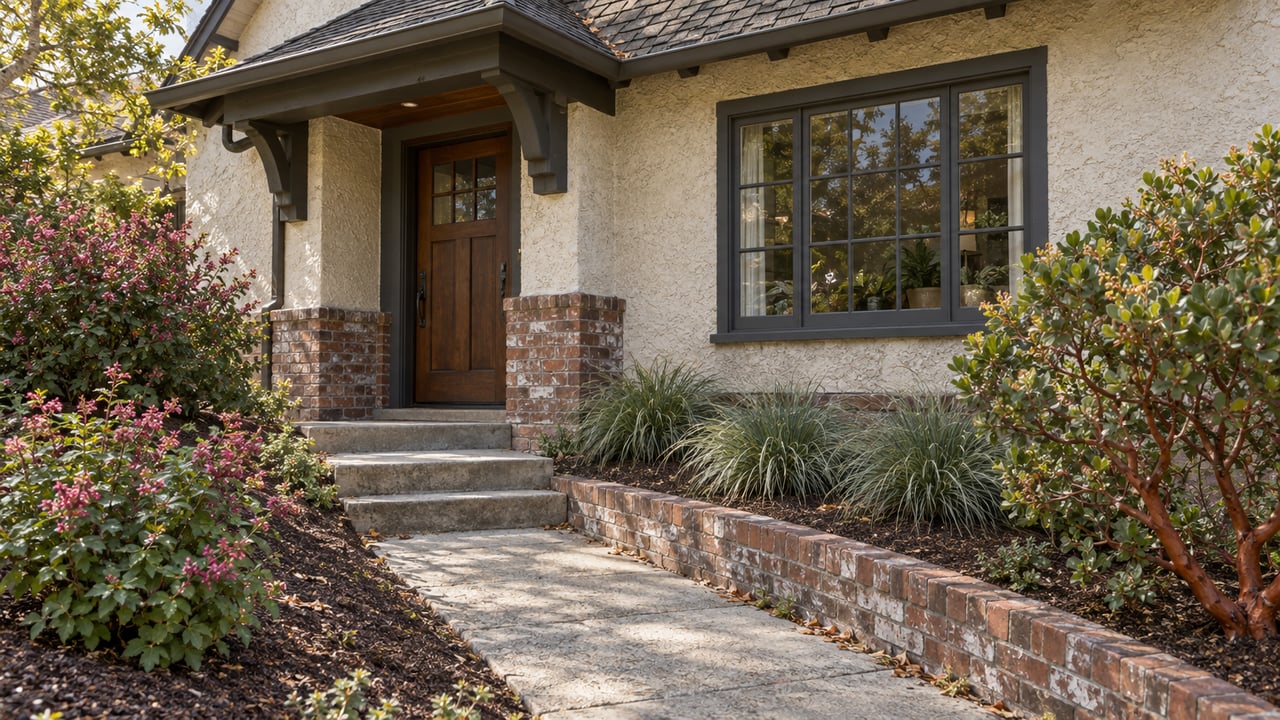
Kensington sits between El Cerrito and Berkeley on a map, close enough that a buyer cross-shopping streets in one town often walks into the next without noticing the line. What that buyer usually doesn't notice is that Kensington isn't a city at all. It has never incorporated. There is no mayor, no city council, no municipal budget hearing where residents show up to argue about the police overtime line. Instead, Kensington buys its core services the way a homeowners association buys landscaping, through a set of independent special districts and inter-agency contracts that are separate from anything El Cerrito or Berkeley residents pay into.
That structure went through its biggest change in generations a year ago. On October 1, 2025, the two districts that had run Kensington's police and fire protection since the 1930s and 1940s merged into one. For a buyer comparing a Kensington address to a nearly identical one three blocks away in El Cerrito, that merger is the reason the tax bills don't map onto each other the way the home prices might suggest.
What Governs Kensington, in Practice
Kensington is unincorporated territory in Contra Costa County. The formal governing body is the county's Board of Supervisors, and Kensington falls under District 1, represented by Supervisor John Gioia. Day to day, land use questions, code enforcement, and community concerns route through the Kensington Municipal Advisory Council, an appointed body of five members and two alternates who meet monthly at the Community Center and advise the county on planning, zoning, and variance matters. Property owner interests get an additional layer of representation through the Kensington Property Owners Association, a nonprofit that publishes an annual directory and serves as a liaison to the county on infrastructure questions like road resurfacing.
None of these bodies write a check for police officers or fire engines. That job belongs to special districts, and until the merger, Kensington ran two of them side by side.
Two Districts Formed a Decade Apart, Merged Almost Ninety Years Later
The Kensington Fire Protection District was formed in 1937. The Kensington Police Protection and Community Services District followed in 1946, was reorganized under community services district law in 1953, and took its final name in 1995. For nearly eighty years, the two districts ran parallel budgets, parallel boards, and in recent years, parallel conversations about whether that duplication still made sense. The Local Agency Formation Commission had floated consolidation as far back as 2009, but Contra Costa County hadn't approved a special district consolidation in more than twenty years.
That changed in 2025. Contra Costa LAFCO approved the dissolution of the fire district and its absorption into the police district, which took on the new name Kensington Community Services District, or KCSD. The effective date was October 1, 2025. As part of the transition, the board temporarily expanded to eleven members to seat directors from both legacy boards, with seven of those seats up for election in 2026 and the total settling back to five by 2028.
For a buyer, the practical upshot is straightforward: the district you'd call about a barking dog complaint, a park rental, or a question about your tax bill is no longer split across two phone numbers. It's one agency now, and it inherited every contract, asset, and liability the old districts held, including the one that matters most for a monthly budget.
The Fire Contract That Explains the Rest
Kensington has never run its own fire department. Since 1995, fire protection has been provided under contract with the City of El Cerrito, with the agreement updated in 2005, 2009, 2019, and 2022. That contract is the clearest evidence of what unincorporated status actually costs.
A 2020 California State Auditor report examining El Cerrito's finances found that in fiscal year 2019-20, the Kensington district paid El Cerrito approximately 28 percent of the estimated total annual cost of El Cerrito's fire department. The same report analyzed service call data from January 2015 through November 2020 and found that only about 11 percent of the calls El Cerrito's fire department responded to originated in Kensington.
That gap between the share of cost and the share of calls is not a billing error. It reflects how a contract like this actually gets priced: not per call, but as a negotiated share of standing capacity, the trucks, stations, and staffing that have to exist whether or not Kensington calls that month. El Cerrito carries the fixed cost of running a fire department sized for both communities, and Kensington's contract payment is how it buys into that capacity rather than building its own. The auditor's report also noted that any effort by El Cerrito to shrink its fire budget would shrink Kensington's contract cost too, since the payment is pegged to a share of total department expense.
| Police | Fire | |
|---|---|---|
| Provider | Kensington's own department, run directly by KCSD | Contracted from City of El Cerrito since 1995 |
| Funding mechanism | According to the Kensington Police Protection and Community Services District, voters approved supplemental police taxes in 1994 and 2010 | Contract payment funded through KCSD's property tax share and fire special tax |
| Duration | Levied in perpetuity, adjusted annually by the Consumer Price Index | Renewed periodically, most recently updated in 2022 |
| What it buys | A dedicated Kensington-badged force, built for the district's narrow, hillside streets | A negotiated share of El Cerrito's total fire department cost |
The police side works differently and is arguably the more direct cost. Kensington voters approved a supplemental special tax for police protection in 1994, then approved a second supplemental tax in 2010 to raise additional revenue for the same purpose. Both are described in district resolutions as levied in perpetuity, with the maximum allowable amount increasing each year by the Consumer Price Index. Unlike the fire contract, this isn't a negotiated share of someone else's budget. It's a parcel tax that funds a department Kensington built and staffed itself, and it appears on the property tax bill as a distinct line that a comparable home in El Cerrito or Berkeley simply won't have, because those cities fund police through their general municipal budgets rather than a standalone voter-approved special tax.
What This Means When You're Comparing a Kensington Listing to Its Neighbors
The standard story about California property tax is simple: 1 percent of assessed value under Proposition 13, plus whatever voter-approved bonds apply to your specific tax rate area. That story holds everywhere in the county, including Kensington. What it doesn't capture is that Kensington's bill carries additional layers that exist because police and fire are funded through separate arrangements rather than a single municipal budget.
Effective property tax rate estimates for the surrounding cities vary depending on the source and methodology, so treat any single number as a starting point rather than a fixed fact for a specific parcel. What's consistent across every source is the structural point: a home in El Cerrito or Berkeley pays into a single municipal government that decides how to split spending between police, fire, libraries, and parks. A home in Kensington pays into KCSD's police tax, contributes to the fire contract payment El Cerrito bills back, and has no city council vote to weigh in on either. The trade is real. Kensington keeps a dedicated, hyperlocal police force with cars marked for the community, at the cost of a permanent, CPI-indexed special tax that a comparable house across the border into El Cerrito doesn't carry in the same form.
Before writing an offer on a Kensington property, it's worth asking two specific questions rather than relying on the county's general tax estimate. First, ask for the seller's most recent property tax bill and look at the line items, not just the total, so you can see the current supplemental police tax amount and how the fire contract cost shows up in the assessment. Second, ask what Tax Rate Area the parcel sits in, since Contra Costa County's rate areas can vary within a few streets of each other depending on which bond measures and assessment districts overlap that specific parcel.
A Buyer's Move-In Reality, Not Just a Tax Line
None of this changes who picks up the phone when something goes wrong in Kensington. The KCSD dispatches its own officers. El Cerrito's fire crews still respond to a Kensington address the same way they'd respond to one two blocks over in their own city. What changed is the paperwork behind those responses, and that paperwork is now simpler than it's been in decades, run by one district instead of two.
For anyone deciding between a Kensington address and a nearly identical one in El Cerrito, the honest comparison isn't which town has the better fire department. It's whether you'd rather buy into a single municipal government that bundles everything into one budget, or into a small unincorporated community that just spent a year consolidating its own governance and still funds its police force through a tax voters approved before some of today's buyers were born.
If you're weighing a Kensington property against something a few streets over in El Cerrito or Berkeley, I can pull the actual tax rate area and current special assessment detail for any specific address you're considering, so the comparison is based on that parcel's real numbers rather than a county-wide average. Reach out to Spencer Mills and we'll build that comparison together before you write an offer.
This article is general information, not legal, tax or financial advice. Consult a qualified professional about your situation.